
Why matcha keeps growing worldwide
From Japanese tea bowls to cafés around the world. What the figures show, and what makes matcha a drink people want to enjoy again.
Growth beyond the photograph
Japan’s agriculture ministry MAFF reports green tea exports worth ¥72.1 billion in 2025, up 98.2% from 2024. It links growth partly to demand for powdered teas, including matcha. These figures describe the value of all green tea exports, not the number of matcha lattes sold. MAFF · 2025.
One tea, many ways to enjoy it
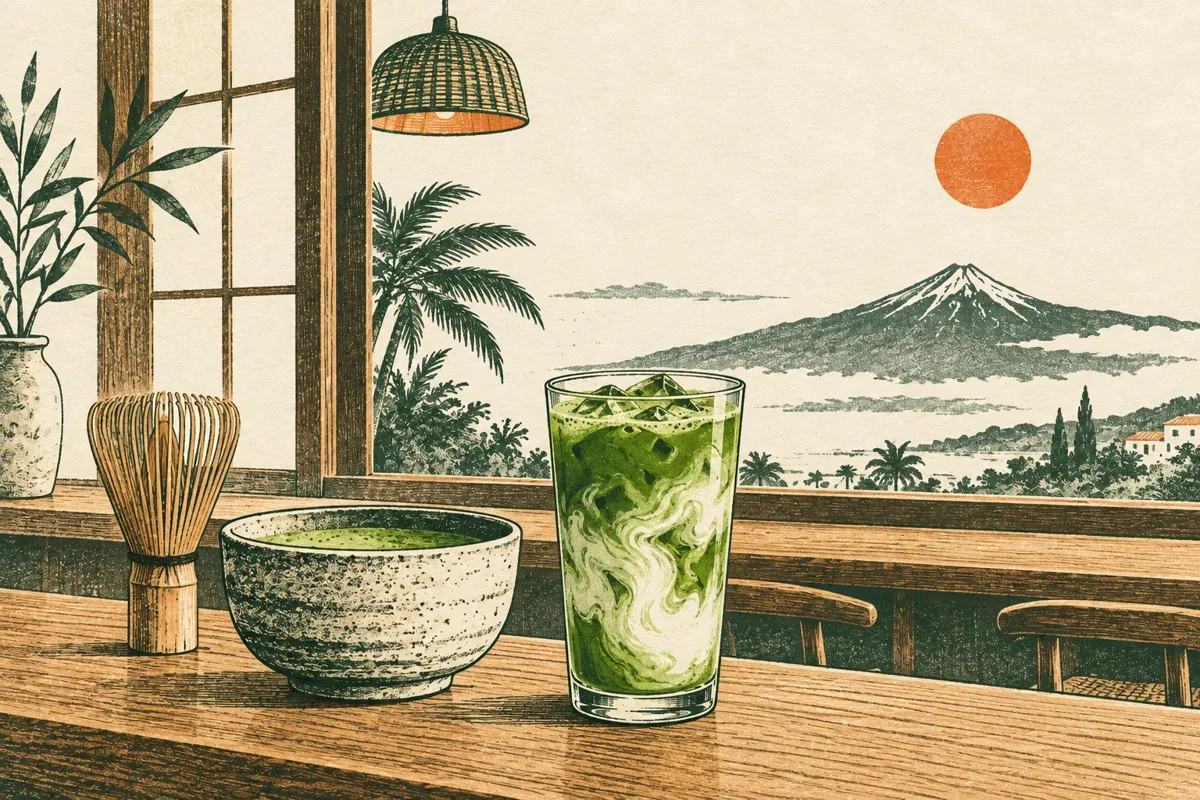
Some people enjoy matcha whisked with water; others choose an iced latte. It can fit different moments and tastes. The green colour catches the eye, but a smooth texture, umami and well-balanced milk are what make the next cup appealing.
For a café, the second visit matters
A trend may bring a curious guest through the door. A carefully made drink gives them a reason to return: pleasant flavour, a smooth texture and a consistent result. That is why it makes sense to get one classic matcha latte right before expanding the menu.
Start with a simple menu
Choose matcha for the drink you want to serve. Test it with your milk, weigh the dose and agree on a shared preparation method. One seasonal strawberry or ube version can sit alongside the classic latte. A good menu does not need to be long; it needs to be clear and enjoyable.